
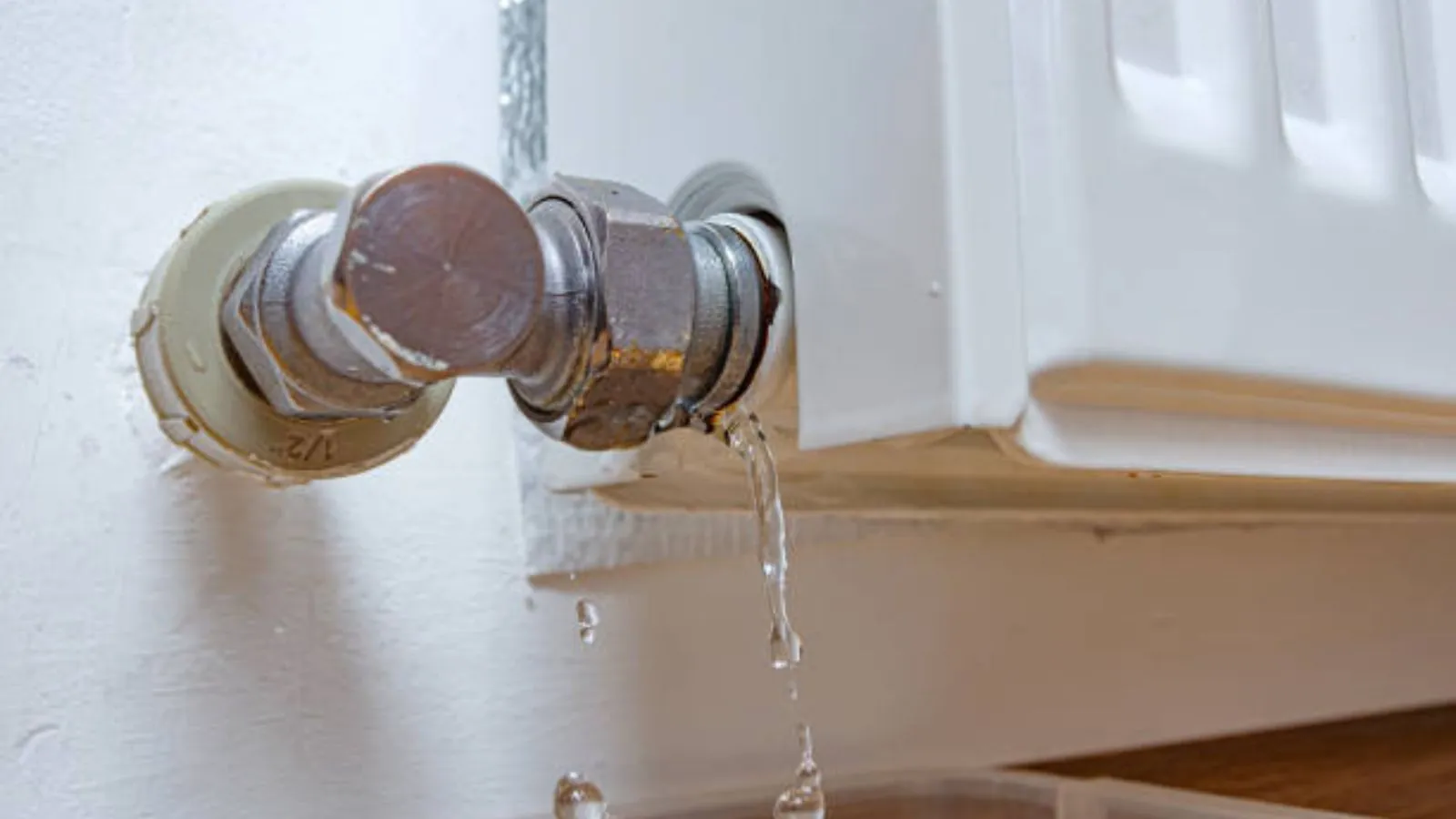
Water heater burst: the first five minutes
Water heater leak cleanup in North Olmsted, OH starts with stopping the flow, and our emergency line is open 24/7 once you have. A leaking tank refills itself from the cold supply, so the water never runs out on its own.
- Turn the cold water valve on the pipe above the tank clockwise until it stops.
- For a gas heater, turn the gas control to off. For an electric heater, switch off its breaker, but only if the panel is dry and you are not standing in water.
- If you smell gas, leave the house and call the gas utility or 911.
- Keep away from hot water on the floor. It can scald.
Then call. The cleanup can begin before a plumber replaces the tank.
What a failed water heater does to a house
A water heater leak is a release of water from the tank, its fittings or its relief valve. Tanks usually fail at the bottom, where sediment and corrosion collect. A slow seep can go unnoticed for weeks behind a utility room door. A full failure releases the whole tank and then runs at supply pressure.
Callers put it plainly: the water heater exploded and leaked everywhere, or it broke overnight. What they need afterwards is drying, cleanup and often drywall repair where the water wicked up the walls.
Where the tank sits changes the damage
| Tank location | What the water reaches | Typical repair |
|---|---|---|
| Basement utility area on bare concrete | Floor, stored boxes, bottom of nearby framed walls | Extraction, drying, limited drywall |
| Finished basement closet | Carpet, pad, drywall, door frames | Pad removal, flood cut on closet walls, drying |
| Main-floor utility closet | Subfloor, adjoining rooms, ceiling below if over a basement | Subfloor drying, flooring repair, ceiling check |
| Garage | Garage drywall and the wall shared with the house | Drywall removal and drying of the shared wall |
In North Olmsted, a large share of homes date from the post-war building boom and keep their water heaters in the basement. That is the better place for a failure, as long as the floor drain is clear. A tank that fails next to finished walls needs the same attention as any basement water damage.
How the cleanup is done
- ExtractHot or cold, the standing water comes out first with extraction units.
- Check the wallsDrywall acts like a wick. Moisture meters show how high water climbed above the floor.
- Remove wet materialsCarpet pad, soaked baseboards and the bottom of saturated drywall are taken out.
- DryAir movers and a dehumidifier run for several days. The process is the one described under structural drying.
- RepairBaseboards, drywall and flooring are replaced once readings confirm the structure is dry.
Water from a tank is clean when it leaves, so most materials can be dried if work starts in the first day or two. Rusty water from the bottom of an old tank can stain concrete and carpet, which is a cosmetic issue, not a safety one.
Tank shut off and floor soaked? Call now and get extraction started.
Call (833) 521-1033Slow leaks are a different problem
A tank that has seeped for months may leave no standing water at all. Instead you find a rust ring on the floor, a soft baseboard or a musty smell in the utility room. That kind of damage often includes mold on the back of the drywall, and the assessment will say so honestly.
If you find it on a Saturday night, you can still call. After-hours callers get the same assessment and the same explanation of scope and price before work starts.
Safety steps around a leaking tank
Do not relight a gas heater that has been flooded, and do not restore power to an electric one until it has been checked. Avoid standing in water near the unit. Water from the hot side can burn skin for some time after the leak starts.
The published standard for this work, ANSI/IICRC S500, classes fresh tank water as Category 1. That classification is what allows most materials to be dried instead of replaced.
What drives the price of water heater leak cleanup
Tank leaks are usually among the more contained water losses, which helps.
- Water category. Clean water, unless it sat for days or mixed with a floor drain backup.
- Area. A utility room, or a finished basement the water crossed.
- Materials. Bare concrete is simple. Carpet, laminate and drywall add work.
- Drying days. Usually three to five when the response is quick.
- Rebuild scope. Often small: baseboards, a few feet of drywall, a section of flooring. Wall repairs are covered on the wall and drywall page.
When a tank lets go without warning, the resulting water damage is often insured, while the worn-out tank itself usually is not. Ask your insurer how your policy handles it. For a scope on your house, call (833) 521-1033. Our crews reach all of ZIP 44070, plus the communities on the service area page.