
The floor looks dry but the room smells damp
That is the situation structural drying exists for. After a leak, surfaces dry in a day while the wood and drywall behind them stay wet for weeks. Structural drying and dehumidification in North Olmsted, OH is the controlled removal of that hidden moisture, measured until the building is back to normal.
People search for this in everyday words: walls still damp after a leak, how long to run fans, how to dry out a wet floor. The trade name is structural drying, and it is the core of what is often called water mitigation.
Water mitigation, in plain terms
Water mitigation means limiting the damage after water gets in. It has two parts. First the liquid water is removed, which is covered on the water extraction page. Then the moisture soaked into materials is removed, which is this page.
The published standard for the work is ANSI/IICRC S500. It calls for measuring moisture, setting a dry target based on unaffected parts of the same building, and monitoring until that target is reached.
The equipment, and what each piece does
| Equipment | What it does | What you will notice |
|---|---|---|
| Moisture meter | Reads the moisture content of wood, drywall and concrete | Small pin marks or a flat sensor pressed to the wall |
| Thermal imaging camera | Shows cooler, wet areas behind surfaces | A handheld camera scanned over walls and ceilings |
| Air mover | Pushes fast, dry air across wet surfaces to speed evaporation | A loud, low fan on the floor |
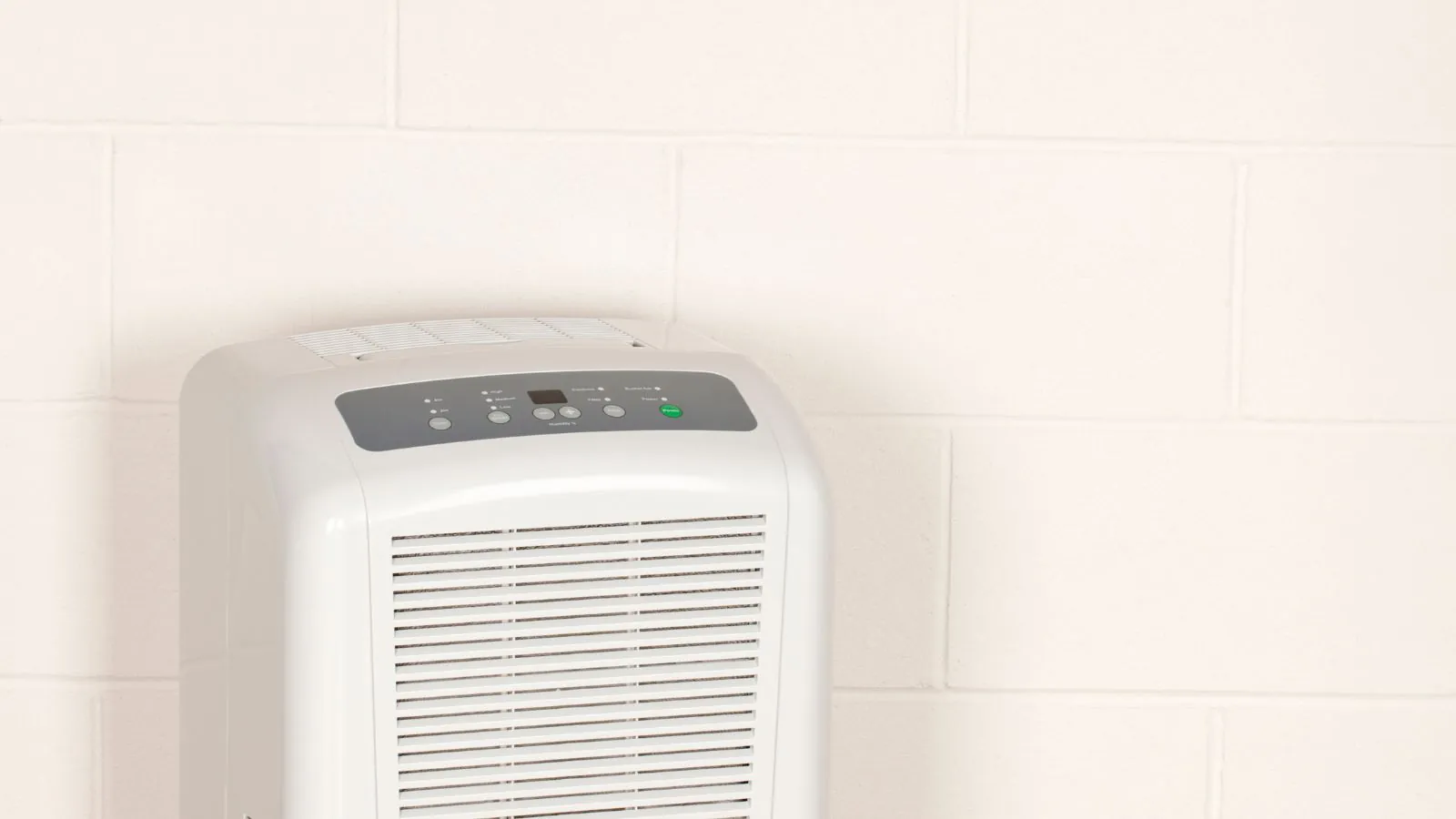
| LGR dehumidifier | Pulls water vapor out of the air and pumps it to a drain | A large unit with a hose, warm air at the outlet |
| Air scrubber | Filters the air when materials are being removed | A box fan with a filter, used on some jobs |
Air movers and dehumidifiers work as a pair. The air movers lift moisture out of materials and into the air. The dehumidifier takes it out of the air. Fans alone just move damp air around the room.
How long does drying take?
A clean water loss caught early usually needs three to five days of round-the-clock equipment. The real answer is in the readings.
- Drywall and carpet dry quickest.
- Framing lumber and plywood subfloor take longer.
- Hardwood flooring, plaster and concrete take longest.
- Cool, closed spaces such as basements dry more slowly than warm rooms.
A technician returns daily to take readings, move equipment and record the numbers in a drying log. When wet materials match the dry reference, the equipment comes out. Not before, and not later than necessary.
Had a leak last week and something still smells damp? Call for a moisture check.
Call (833) 521-1033Moisture mapping
Moisture mapping is the survey done at the start. Every affected wall, floor and ceiling is tested and the wet boundary is marked, often with tape or a sketch. It answers the question homeowners ask most: how far did the water actually go?
The map also decides what is removed. Baseboards usually come off so air can reach the bottom of the wall. Wet insulation is taken out because it cannot be dried in place. Sound drywall is often saved by drilling small holes behind the baseboard line.
Drying North Olmsted houses
Housing here falls into two broad groups. Most homes date from the 1950s and 1960s. A smaller number, concentrated along Butternut Ridge Road, were built before 1920. Older houses often have plaster on wood lath and solid plank subfloors, which release moisture slowly and need a longer, gentler drying plan than modern drywall.
Basements are the other factor. Below-grade rooms stay cool and humid, so they often need more dehumidification than the room size alone suggests. See basement water damage cleanup for that side of the job.
Safety steps while equipment runs
Do not move or unplug the machines, and avoid running cords under rugs or across doorways. Keep children and pets away from air movers. The room will be warm and noisy, which is normal.
What drives the price of structural drying
- Water category. Category 1 losses can be dried where they sit. Categories 2 and 3 mean removal first.
- Wet area. Measured during moisture mapping, not guessed.
- Materials. Dense materials need more days.
- Drying days. Each day of equipment and monitoring is part of the price.
- Rebuild scope. Whatever was removed to allow drying is put back.
Drying that follows a sudden, accidental leak is commonly part of an insured loss, and the drying log supports the claim. Coverage is your insurer's call. Ring (833) 521-1033 to have your home assessed. Drying crews operate in North Olmsted and each town on the service area page.