
Spots on the wall, a musty closet, a smell under the stairs
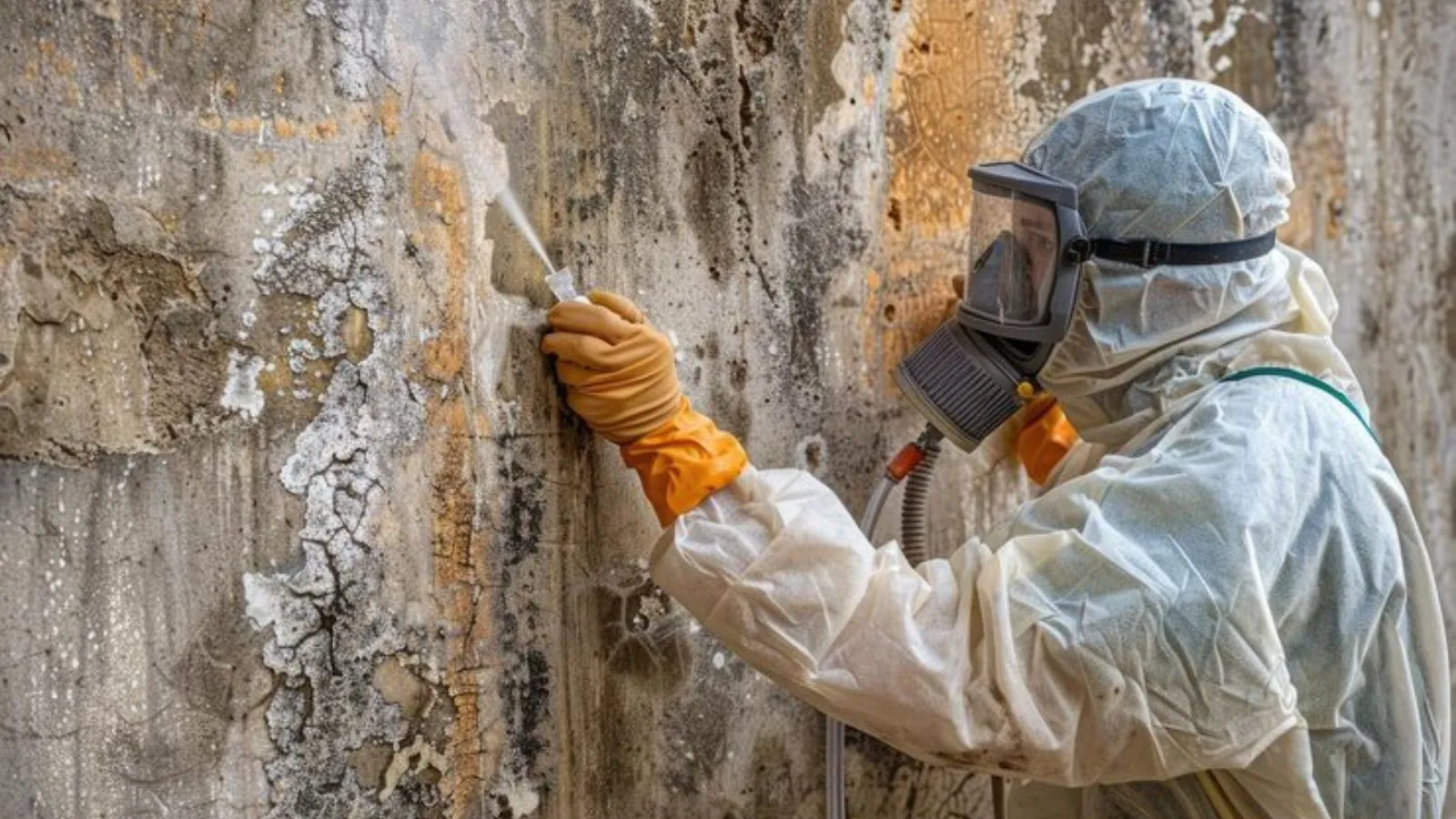
Most people do not search for remediation. They search for what they see: black spots in the bathroom corner, a musty smell in a closet, fuzzy growth behind furniture, or mold under a lifted carpet. Mold remediation in North Olmsted, OH is the trade name for dealing with all of these properly: finding the moisture, containing the area, removing what is contaminated and cleaning the rest.
Mold follows water
Mold needs moisture to grow. In nearly every call, there was a leak first. Callers mention a toilet upstairs that leaked into a finished basement ceiling, a bathroom sink that dripped inside the vanity, an air conditioner that wet a closet, and a roof or siding leak nobody noticed.
That is why the first step is never a spray bottle. If the leak is still active, mold will return to any surface that gets wet again. The leak has to be fixed first, by a plumber, roofer or HVAC technician as needed.
Where mold turns up in North Olmsted homes
| Location | Usual moisture source | What is typically affected |
|---|---|---|
| Bathroom ceiling and shower corner | Steam and poor ventilation, or a leak above | Paint, drywall paper, caulk |
| Closets on outside walls | Condensation, or a leak in the wall | Drywall, stored clothing and boxes |
| Behind furniture against a cold wall | Trapped humid air | Paint and drywall surface |
| Finished basement walls and under stairs | Seepage, past flooding, high humidity | Drywall, framing, carpet backing |
| Under sinks | Slow supply or drain leak | Cabinet base, wall behind |
| Attic sheathing | Roof leak or bathroom fan venting into the attic | Roof decking, insulation |
Many houses here have finished basements, and the city's own sewer guidance acknowledges that lower levels can take water during heavy rain. A basement that has been wet even once deserves a check behind the finished walls. See basement water damage cleanup for the water side of that.
Testing, inspection and clearance
Callers often ask about testing before they ask about removal. Here is how the pieces fit.
A visual inspection with a moisture meter comes first. If you can see mold and you know where the water came from, testing to prove mold exists is usually unnecessary.
Air or surface sampling is useful when you smell mold but cannot find it, or when a third party needs a written result. Samples are analyzed by a laboratory.
Clearance testing happens after remediation. An independent assessor, not the company that did the work, checks that the area was cleaned. Ask for independent clearance when a sale, a lender or a landlord requires proof.
How remediation is done
The published standard for this work is ANSI/IICRC S520. In plain terms, it calls for the following.
- Fix the moistureThe leak or humidity source is corrected and wet materials are dried.
- ContainPlastic sheeting and negative air pressure keep spores from spreading to clean rooms.
- Filter the airAir scrubbers with HEPA filters run throughout the work.
- RemoveMoldy drywall, insulation, carpet and other porous materials are cut out, bagged and taken away.
- CleanFraming and other solid surfaces are HEPA vacuumed and wiped or sanded clean.
- Verify and rebuildThe area is checked, by an independent assessor where required, and then rebuilt.
Painting over mold or fogging a room with a chemical is not remediation. The contaminated material has to leave the building.
Found mold while opening a wall or lifting carpet? Stop, close the room and call.
Call (833) 521-1033What we will and will not say about health
We remove mold. We do not diagnose anyone. If you have health questions about mold exposure, they belong with a physician. We also will not promise that mold will never return. It will stay away as long as the area stays dry, and that depends on the moisture source being fixed.
Ask whether your state licenses mold work, and ask any company which standard its crews follow.
Mold found during a home sale
Sometimes a buyer's inspector flags mold, and the lender will not release the loan until it is removed. This is a common call. We can remediate and document the work, and an independent assessor can provide clearance results. Whether a lender accepts that documentation is the lender's decision, so ask them what they need before work starts.
Safety steps before the crew arrives
Do not disturb the growth, and avoid running fans or the furnace blower through that room. Keep the door closed. If you must go in, wear gloves and a mask rated N95 or higher, and wash afterwards.
What drives the price of mold remediation
- Size of the affected area. A corner of a bathroom, or a basement wall from end to end.
- Location. Attics, crawl spaces and wall cavities take longer to contain and reach.
- Materials. Porous materials are removed and replaced. Solid wood and concrete are cleaned.
- Moisture source. Whether drying is needed first. See structural drying.
- Rebuild scope. Drywall, insulation, paint and flooring afterwards, as described under wall and drywall repair.
Insurance cover for mold is often limited and usually depends on whether a covered water loss caused it. Your insurer can tell you the limit. Call (833) 521-1033 to have the area assessed. Mold work is done in North Olmsted and the towns shown on the service area page.