
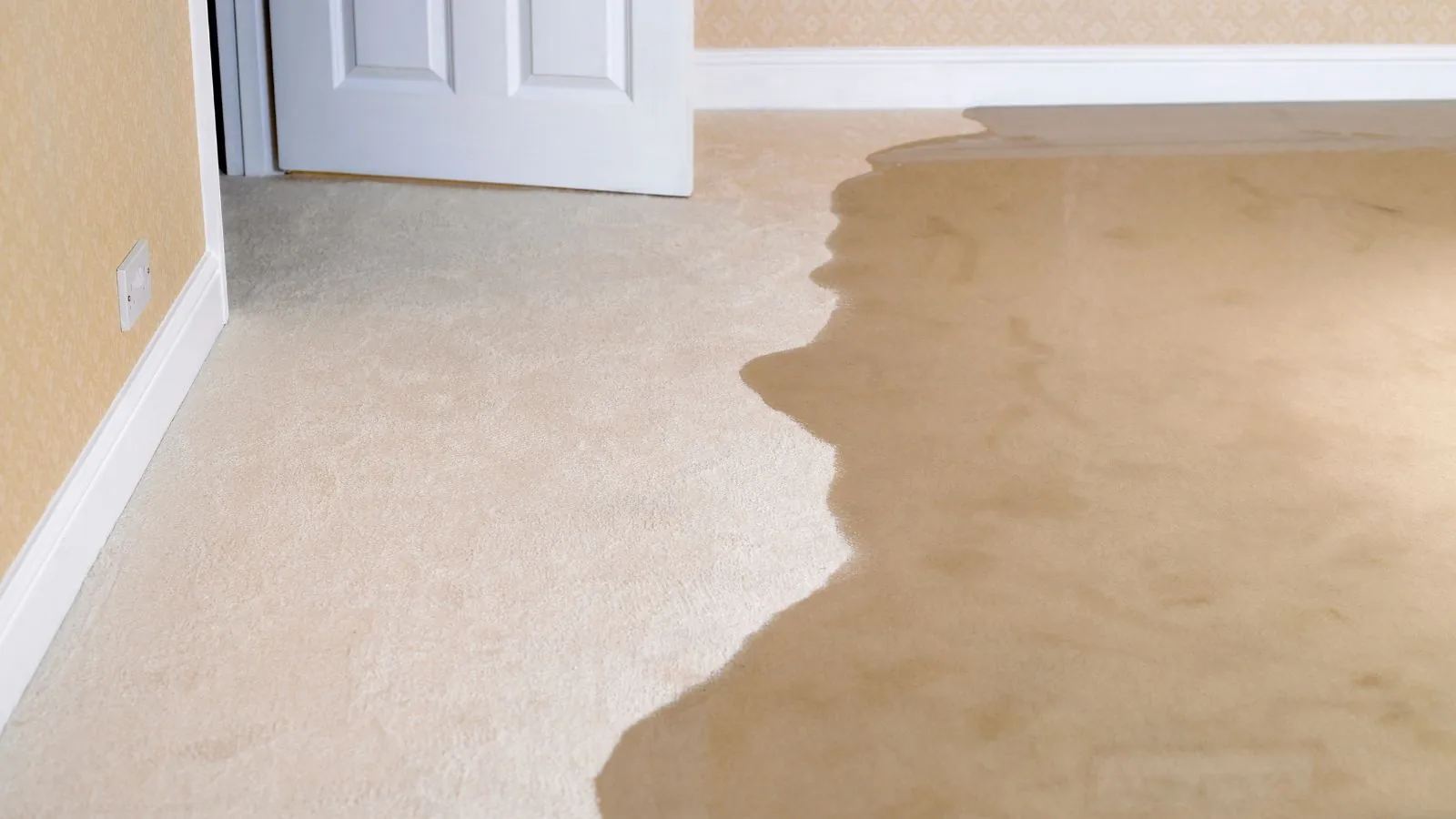
Keep it or replace it
Carpet water damage restoration in North Olmsted, OH comes down to one decision, and three facts settle it: where the water came from, how long the carpet has been wet, and what is underneath.
| Situation | Carpet | Pad |
|---|---|---|
| Clean water, wet less than two days | Usually saved | Usually replaced, sometimes dried |
| Clean water, wet several days | Often replaced, risk of odor and delamination | Replaced |
| Gray water from a washer or dishwasher | Sometimes saved after cleaning | Replaced |
| Sewage or outside floodwater | Replaced | Replaced |
| Carpet glued directly to concrete | Depends on the adhesive and the time wet | No pad |
Where sewage is involved, the carpet is never kept. That rule is explained on the sewage backup cleanup page.
Why the pad is the problem
Carpet fibers release water fairly easily. The pad underneath is foam, and it holds water like a sponge. A carpet can feel dry on top while the pad below is saturated and the subfloor under that stays wet.
That hidden layer is where odor starts. It is also why renting a carpet cleaner after a leak does not solve the problem. The machine pulls water from the fibers and leaves the pad and floor as wet as before.
What callers describe
People call about carpet that squelches after a pipe let go, a closet where the carpet and pad were soaked by a neighbor's sprinkler system, and a bedroom carpet lifted at the corner to reveal mold on the backing. The last one is a sign the area had been damp for a long time, and it changes the job from drying to removal.
How wet carpet is restored
- Furniture is moved off the wet area. Blocks or foil go under legs to stop stains.
- Water is extracted from the carpet with a weighted tool that presses it out of the fibers and pad.
- The carpet is lifted along one wall. Wet pad is cut out and bagged.
- The subfloor or slab is checked with a moisture meter and dried with air movers.
- The carpet is dried from both sides by floating it on a layer of moving air.
- New pad is installed, the carpet is stretched back onto the tack strips and cleaned.
The drying follows the same rules as any other job, with daily readings, as set out on the structural drying page.
Carpet wet since yesterday? Call now. The first two days decide whether it can be kept.
Call (833) 521-1033Basements and carpet over concrete
Many North Olmsted homes from the 1950s and 1960s have finished lower levels with carpet laid over a concrete slab. Concrete holds moisture and stays cool, so carpet there dries more slowly than carpet upstairs. If the water came through the foundation or a floor drain, the carpet is only one part of a larger job covered under basement water damage cleanup.
What you can do before help arrives
- Stop the source if you can.
- Lift curtains and bed skirts off the wet carpet.
- Remove books, shoes and anything with dye that could transfer.
- Stay off the carpet as much as possible. Walking on it pushes water deeper and can separate the backing.
- Do not use a household vacuum on wet carpet.
The keep-or-replace table reflects ANSI/IICRC S500, the published standard for water damage restoration, which ties the decision to water category and time wet.
What drives the price of carpet restoration
- Water category. Clean water allows saving the carpet. Contaminated water means replacement.
- Area. Square footage of wet carpet and the number of rooms.
- Materials. Carpet quality, pad type, and whether it sits on wood or concrete.
- Drying days. Usually three to five when work starts early.
- Rebuild scope. New pad only, or new carpet. Baseboards and the bottom of the drywall may be part of it.
Carpet soaked by a sudden, accidental leak is often part of an insured loss. Your policy and your insurer settle it. For a scope, call (833) 521-1033. Carpet jobs are taken anywhere in ZIP 44070, and the service area page covers the rest.