
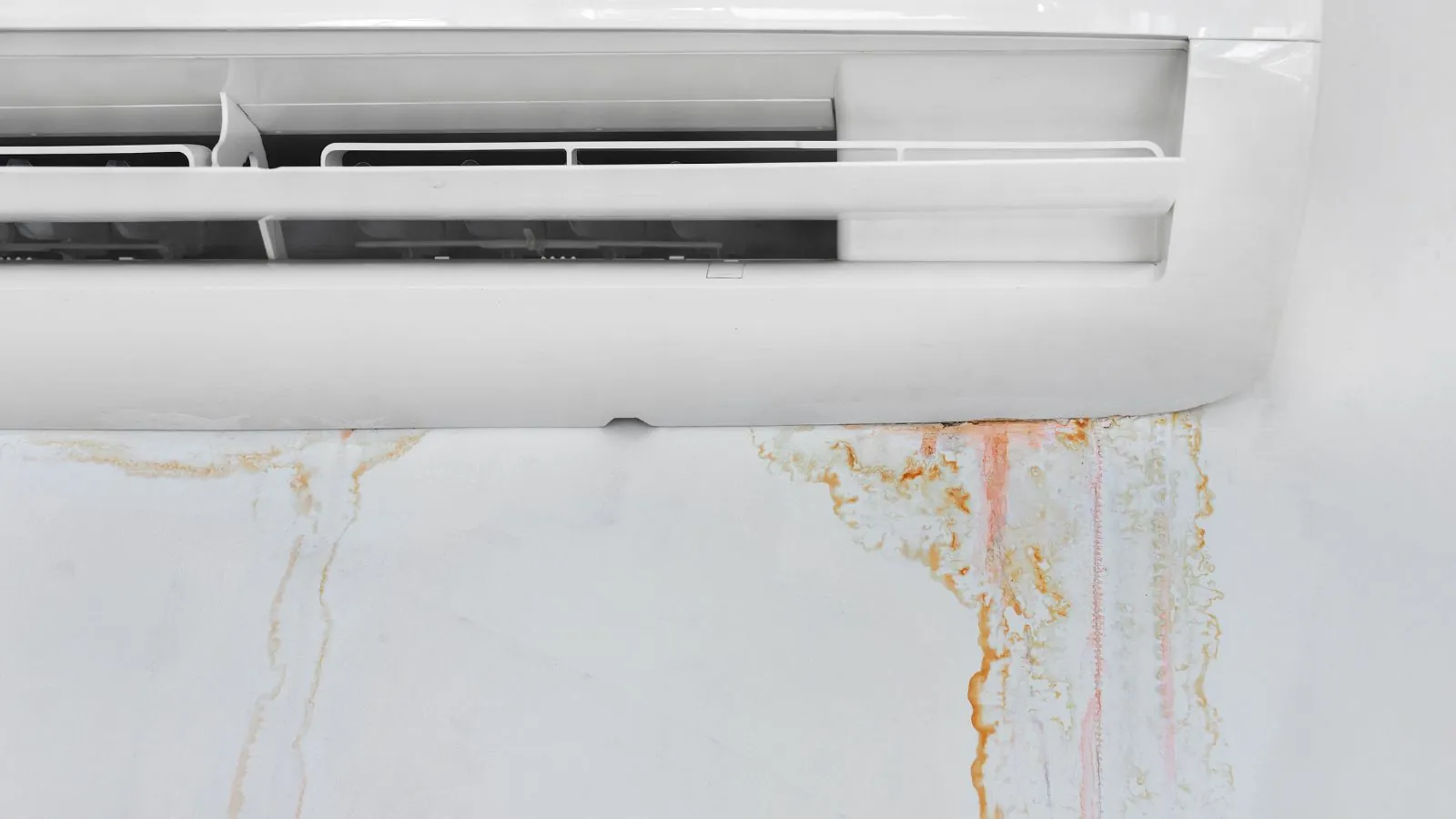
How an air conditioner ends up damaging a house
AC leak water damage in North Olmsted, OH comes from condensate, the water an air conditioner pulls out of humid indoor air. A working system sends that water down a drain line. When the line clogs or the drain pan rusts through, the water goes into the building instead.
This is water damage from cooling equipment, and the repair is about the house, not the unit. An HVAC technician clears the line or replaces the pan. We dry and repair the ceiling, wall or floor that took the water.
Signs you are looking at an AC leak
- A stain on the ceiling directly below an attic air handler.
- A wet or musty closet next to the furnace and coil.
- Water around the base of the indoor unit in the basement.
- Streaks running down the wall under a wall-mounted unit.
- Wood flooring that has started to cup near a supply vent or the unit.
Callers mention a condensation line that had been backing up, a wet spot in a bedroom closet next to the air handler, and carpet lifted to find mold underneath. The common thread is time. These leaks are slow, so the damage is usually older than it looks.
Slow leak, bigger footprint
Because condensate drips instead of pouring, it rarely leaves a puddle. It soaks into whatever it lands on and spreads sideways. A stain the size of a dinner plate on a ceiling often sits under several square feet of wet insulation.
| Where the unit sits | Where the water goes | What to check |
|---|---|---|
| Attic | Insulation, ceiling drywall, top of walls | Ceiling below and the closet nearest the unit |
| Interior closet | Subfloor, carpet, base of closet walls | Adjoining rooms and the level below |
| Basement | Floor around the unit, nearby framed walls | Bottom of drywall and stored items |
| Wall-mounted unit | The wall under it | Baseboard and flooring at that wall |
When the stain is overhead, the repair follows the steps on our ceiling water damage repair page. When a closet floor or wall is wet, the drywall work is described under wall and drywall water damage repair.
Assessment and drying
- The system is switched off so no more condensate is produced.
- Moisture meters map the wet area on ceilings, walls and floors.
- Infrared imaging picks out soaked insulation overhead, so the ceiling is not torn open on a guess.
- Saturated insulation and crumbling drywall are removed. Sound materials are dried in place.
- Air movers and a dehumidifier run until readings match dry areas of the house.
- Drywall, paint, baseboards or flooring are repaired.
Condensate is clean water when it forms, but a pan that has held standing water for weeks is not clean. Materials wet for a long time are treated more cautiously, and the assessment checks for mold. If growth is found, the mold remediation page covers the containment that has to come before repairs.
Stain under the air handler? Call and say how long you have noticed it.
Call (833) 521-1033Why this matters in North Olmsted homes
Many houses here were built in the 1950s and 1960s and had central air added later, often with the coil above the furnace in a basement or in a tight interior closet. Retrofit drain lines can have long flat runs that clog more easily. That is a general point about added systems, not a count of local failures, and an HVAC technician can tell you how yours is routed.
Safety steps before you look closer
Switch the system off before opening an access panel. Do not touch wiring or a wet light fixture below the leak, and avoid standing under a ceiling that has started to sag. A stained ceiling can hold more water than it shows.
ANSI/IICRC S500, the published standard for water damage restoration, sets the method: measure, remove what cannot be dried, and dry the rest to match unaffected parts of the house.
What drives the price of AC leak repair
- Water category. Fresh condensate is clean. Long-standing pan water is treated as contaminated.
- Wet area. Usually modest, but wider than the visible stain.
- Materials. Attic insulation, drywall, carpet or hardwood.
- Drying days. Closed cavities such as closets and ceilings need directed airflow.
- Rebuild scope. A ceiling patch and paint, or a closet floor and wall section.
Insurers tend to separate a sudden pan overflow from a drip that went on all summer. Which one you have is for your insurer to decide, so ask. Call (833) 521-1033 for a scope. Every part of North Olmsted is covered, and the service area page names the towns around it.