
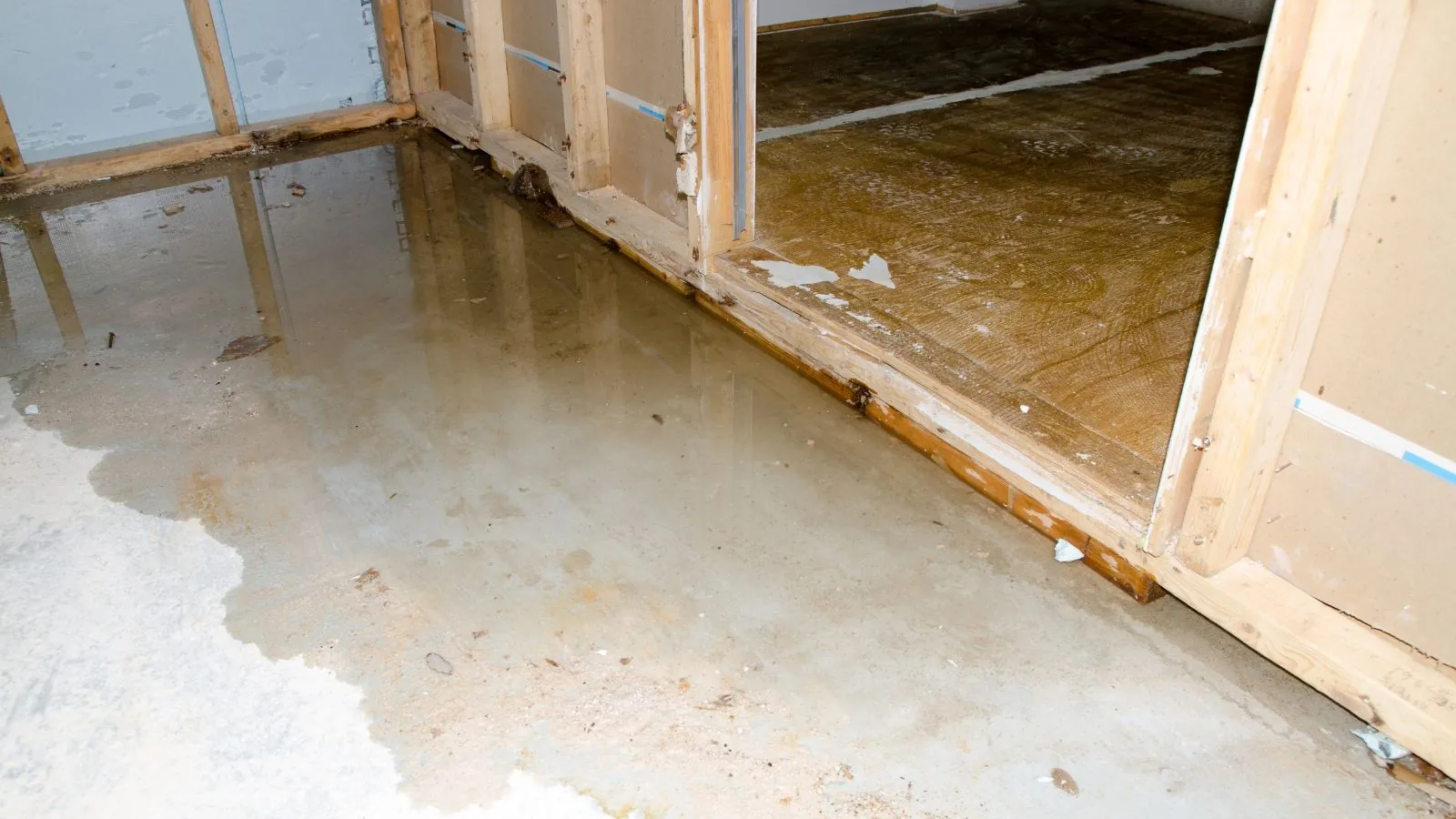
Water in the basement: when to treat it as an emergency
Basement water damage in North Olmsted, OH is an emergency when water is rising, when it has reached a finished wall, or when it came up through a drain. The line is open 24/7. Do not walk into standing water if it touches outlets, an extension cord, the furnace or the water heater.
If the panel is upstairs or on a dry wall, switch off the basement circuits. Move boxes and anything valuable to a higher shelf, and take photos from the stairs before you touch anything.
First question: where did it come from?
A basement is the below-grade room where sump pits, floor drains, laundry and water heaters all sit. Each source brings a different kind of water.
| Source | Clue | Water category | Page with more detail |
|---|---|---|---|
| Sump pump failure | Pit is full, pump silent or tripped | Usually gray | This page |
| Seepage through walls or floor | Damp line along the wall after rain | Gray, sometimes worse | This page |
| Floor drain backup | Dark water around the drain, odor | Category 3 | Sewage backup cleanup |
| Water heater or laundry failure | Water near the appliance | Clean or gray | Water heater leak cleanup |
| Surface water through a window well or door | Mud and debris | Category 3 | Flood damage cleanup |
Callers say it in fewer words: water coming into the basement, or a basement that is flooded and smells of mold and needs fixing. The cleanup starts the same way either time, by finding out which row of that table applies.
What North Olmsted's own records say about basements
The city publishes a homeowner guide to sewer backups. It says an overloaded sanitary sewer can reverse into the bottom level of a house, and that this should happen only in heavy rain or a long wet spell.
The guide also says to be most concerned if your building has a basement and no sump pump, because footing drains may be tied to the sanitary line. That is a point to raise with a plumber. For us it means asking every basement caller whether water rose from the drain or came through the walls.
Storm history backs this up. After the storms of May 12, 2014, the National Weather Service put the number of inundated homes in North Olmsted and two neighboring cities at nearly 1,000.
Finished and unfinished basements
An unfinished basement with bare concrete and block walls is the simplest case. Water is pumped out, the floor is cleaned, and dehumidifiers bring the humidity down.
A finished basement is a different job. Carpet, pad, drywall, insulation, paneling and built-in cabinets all absorb water. Drywall wicks it upward, often a foot or more above the water line.
- Pump and extractStanding water is removed with pumps and extraction units. See water extraction.
- Remove wet finishesPad, soaked carpet, baseboards and the lower section of drywall and insulation come out.
- CleanConcrete and framing are cleaned. After contaminated water, they are disinfected.
- DryDehumidifiers and air movers run for days. Below-grade rooms need more dehumidification than rooms upstairs.
- RebuildNew drywall, trim and flooring once readings are normal.
Water on the basement floor right now? Call and say whether it came from the drain, the walls or a pipe.
Call (833) 521-1033Restoration is not waterproofing
We are asked about this often, so here is the honest answer. Water damage restoration cleans up and repairs what got wet. It does not stop groundwater from entering. Waterproofing, drain tile, crack injection, foundation inspection and sump pump replacement belong to waterproofing and plumbing contractors.
We will tell you what we saw: where the water entered and how high it reached. That gives the next contractor a head start.
After hours
Sump pumps fail during storms, and storms often arrive at night. Late calls get the same sequence: safety check, pumping, removal of soaked materials, and machines running by the time the crew drives away.
Water categories come from ANSI/IICRC S500, the published standard for this work. The category is the first thing a crew settles in a basement, because it decides whether finishes are dried or removed.
What drives the price of basement cleanup
- Water category. Clean pipe water, gray sump water or sewage. Each step up adds cleaning and removal.
- Area and depth. A damp corner, or several inches across the whole floor.
- Materials. Finished walls and flooring are the main cost in a finished basement.
- Drying days. Concrete and cool air slow things down.
- Rebuild scope. How much of the finish has to be put back.
Homeowners policies often respond to sudden pipe failures but usually exclude groundwater seepage and flood, and sewer or sump backup often needs an added endorsement. Your agent can tell you which you have. Call (833) 521-1033 for your scope. Basement crews work all over North Olmsted, Deerfield among the areas, and in nearby towns.