
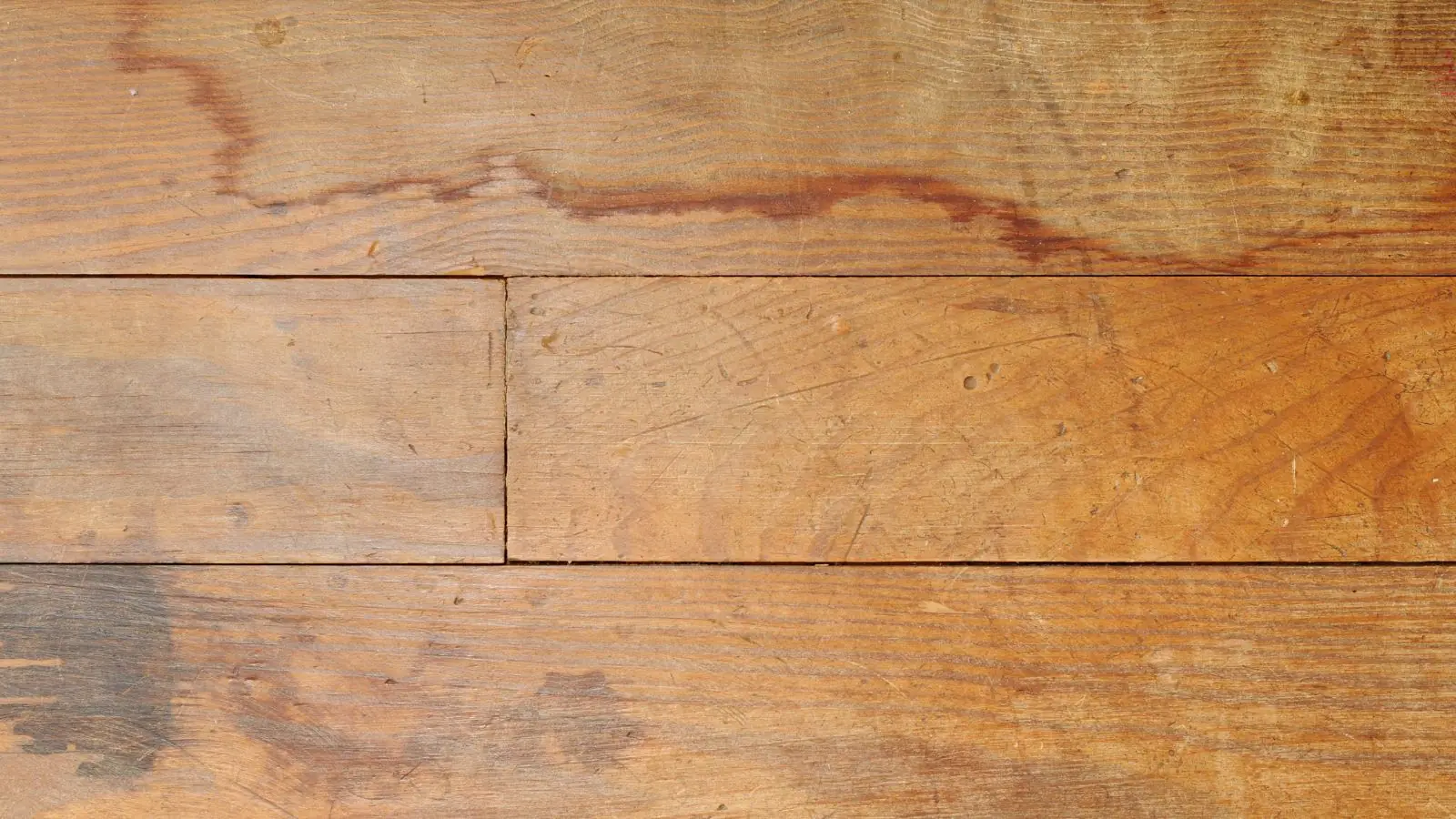
What wet wood does
Hardwood floor water damage repair in North Olmsted, OH starts with understanding one thing: wood moves. A board that takes on moisture swells across its width. Because the bottom usually gets wetter than the top, the edges rise and the board cups.
This page covers solid hardwood, engineered wood and laminate. They look similar from above and behave very differently when wet.
Cupping, crowning and buckling
| What you see | What it means | Can it be fixed? |
|---|---|---|
| Cupping: edges higher than the center | Moisture is coming from below or the sides | Often, once the floor is dried to a normal reading |
| Crowning: center higher than the edges | The top was wetter, or a cupped floor was sanded too soon | Usually needs sanding after proper drying |
| Buckling: boards lifting off the subfloor | Severe swelling with nowhere to go | Affected boards are replaced |
| Dark staining along the seams | Water sat in the joints, sometimes with mold | Sanding may remove it. Deep stains mean replacement |
| Laminate edges swollen | The fiberboard core absorbed water | Laminate is replaced |
One caller described walnut floors that had started to cup with no spill anyone could remember. The cause turned out to be a condensate line that had been backing up nearby. If you suspect cooling equipment, read about AC leak water damage. Another needed boards dried after a washer valve broke and ran unnoticed for an hour.
Find the source before touching the floor
Cupping that appears with no obvious spill means water is reaching the floor from somewhere hidden.
- A leaking appliance line, most often the dishwasher or refrigerator.
- A plumbing leak in the wall or under the floor.
- A damp crawl space or basement below.
- A condensate drain overflowing near the floor.
Until that source is found and stopped, any drying is temporary. The assessment includes the subfloor and whatever is under it, which is why a floor problem sometimes leads to the crawl space water damage page.
How hardwood is dried
- MeasureA moisture meter made for wood reads the boards and the subfloor. Unaffected boards elsewhere in the house give the target.
- ExtractWater in the seams and under the boards is pulled out with a vacuum mat system sealed to the floor.
- Dry from both sidesDehumidifiers dry the room. Where there is a basement below, air movers dry the subfloor from underneath.
- WaitWood must come down to the target slowly. Forcing it causes cracks and permanent gaps.
- Refinish or replaceOnce readings are stable, the floor is assessed again. Many floors flatten enough to need only sanding and finish.
Patience is the hard part. A floor can take a week or more to reach a stable reading, and sanding before then leaves it crowned for good.
Boards changing shape? Call before anyone sands or pulls them up.
Call (833) 521-1033Older floors in North Olmsted
Houses along Butternut Ridge Road, where the city's oldest homes stand, and many of the post-war houses across town, have solid strip flooring nailed to plank or plywood subfloors. Solid boards are thick enough to be sanded several times, so drying and refinishing is usually worth attempting. Engineered floors have a thin wear layer and less room for sanding.
Safety steps for a buckled floor
Raised board edges catch feet, so keep traffic off the area and do not try to press boards flat. Avoid pulling boards yourself, because nails and splinters come up with them. Keep cords off the wet section.
ANSI/IICRC S500, the published standard for water damage restoration, treats hardwood as a slow-drying, dense material. That is the technical reason the schedule is longer than for carpet or drywall.
What drives the price of hardwood floor repair
- Water category. Clean water allows drying in place. Contaminated water under wood usually means removal.
- Area. The number of boards affected and whether the damage crosses rooms.
- Materials. Solid hardwood, engineered wood or laminate.
- Drying days. Wood floors take the longest of any common material.
- Rebuild scope. Sanding and finishing, board replacement, or a full new floor.
Insurers often pay for floors damaged by a sudden leak and often decline slow moisture problems. Ask yours before assuming either. Call (833) 521-1033 for your scope. Wood floor work is done across North Olmsted, Butternut Ridge included, and in the neighboring towns we serve.