
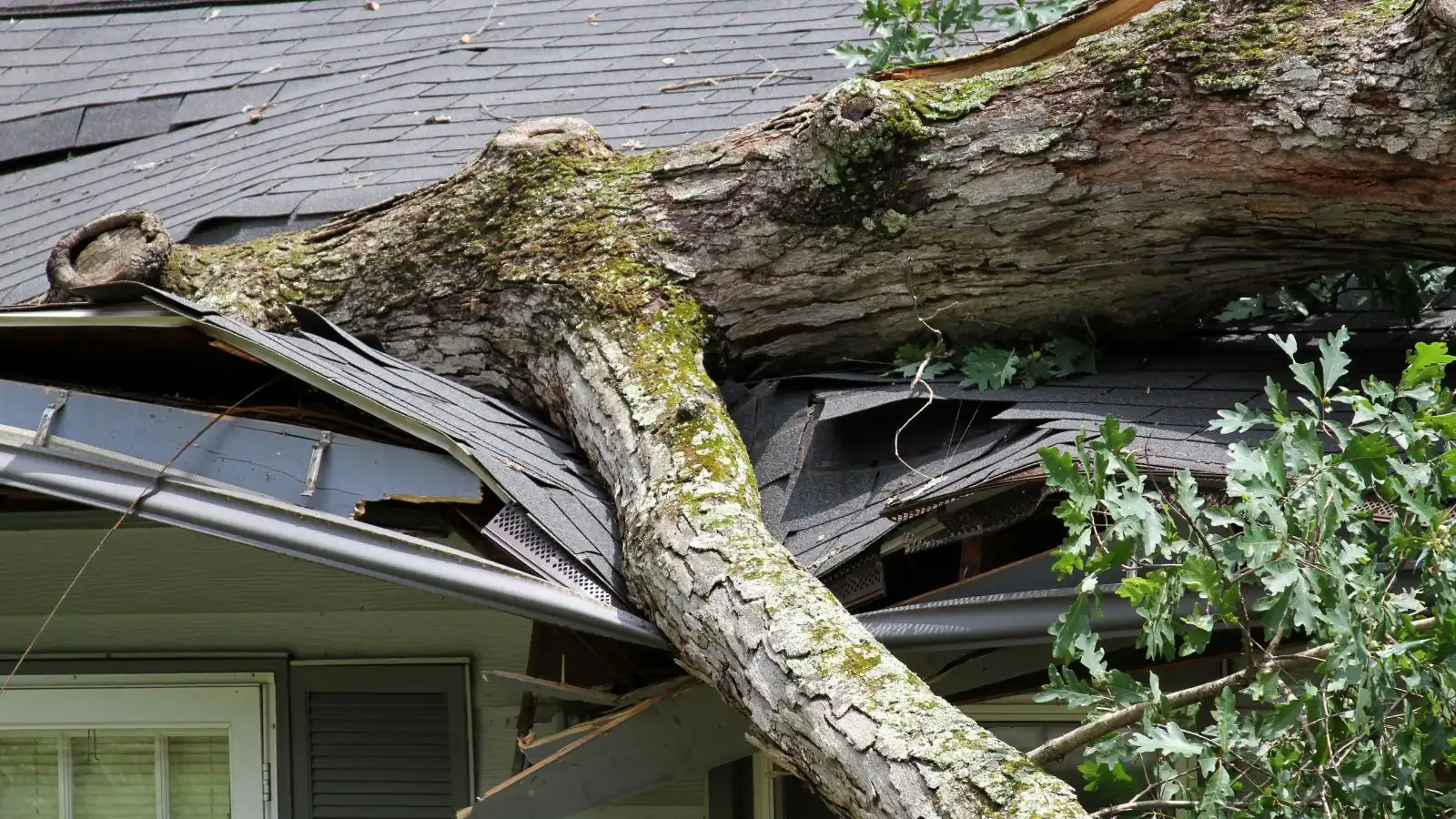
Rain coming in right now: what to do first
In North Olmsted, OH, storm water damage stays an emergency for as long as the building is open to the weather, and the line is answered 24/7. If a tree, wind or hail has opened the roof or broken a window, stay out of rooms with sagging ceilings and keep well away from any downed power lines. Call the electric utility or 911 for those before anything else.
If it is safe, move furniture and electronics away from the leak, put down buckets and towels, and photograph the damage inside and out. Do not climb onto a wet or damaged roof.
What counts as storm water damage
Storm water damage is rainwater that enters through the building envelope after wind, hail or falling limbs damage the roof, siding, windows or doors. The water comes from above and from the sides.
That makes it different from rising water. If water flowed in at ground level or came up from below, see flood damage cleanup. If a roof simply leaks in ordinary rain with no storm damage, the ceiling water damage repair page is the right one.
Storms on the record in North Olmsted
Forecasters at the Cleveland weather office wrote up the evening of May 12, 2014 in detail. A complex of slow-moving storms with embedded supercells crossed northern Ohio, producing two confirmed tornadoes in neighboring Medina and Lorain counties and intense rain across western Cuyahoga County.
For homeowners, the point is that severe storms here bring wind and water together. A roof that loses shingles in the first ten minutes then takes an hour of heavy rain through the gap. The faster the opening is covered, the smaller the interior job.
How storm water travels through a house
| Entry point | Path inside | What gets wet |
|---|---|---|
| Missing shingles or punctured roof | Decking, attic insulation, ceiling | Ceilings, top of walls, light fixtures |
| Broken window or failed seal | Sill, wall cavity below | Drywall, insulation, flooring at that wall |
| Damaged siding or flashing | Sheathing, wall cavity | Insulation and drywall, often unseen for days |
| Blocked gutters during heavy rain | Fascia, soffit, top of the wall | Upper wall and ceiling edge |
Wall cavities are the part people miss. Wind-driven rain behind siding leaves no stain at first. A caller once described water damage in a kitchen wall that came in from the siding, found only when the wall went soft.
The cleanup sequence
- Hazards are checked: electricity, ceilings holding water, broken glass.
- Openings are covered. Roof tarping and board-up are coordinated so rain stops entering.
- Standing water is extracted from floors and carpet.
- Wet attic insulation and ruined drywall are removed. Insulation that stays wet will keep the framing wet.
- Moisture meters and a thermal camera trace water inside walls and ceilings.
- Air movers and dehumidifiers dry the structure, with daily readings.
- Interior repairs follow once the roof or siding has been permanently fixed.
Permanent roof, siding and window repairs belong to those trades. We handle the water side and coordinate timing, so new drywall is not hung under a roof that still leaks.
Storm opened your roof or a window? Call now and describe where water is getting in.
Call (833) 521-1033After-hours storms
Severe weather often peaks in the evening and overnight. The response does not wait for morning. Extraction and drying begin on the first visit, and if the damage is to the walls, the repair method is described under wall and drywall water damage repair.
The drying side follows ANSI/IICRC S500, the published standard for water damage restoration. It matters after a storm because insulation and framing have to reach a measured target before ceilings are rebuilt.
What sets the price of storm water cleanup
- Water category. Rainwater through a roof starts fairly clean but picks up dirt from insulation and attic dust. Water that sat is treated more cautiously.
- Area. One room under a hole, or several rooms along a damaged roof line.
- Materials. Attic insulation, ceilings, hardwood, carpet.
- Drying days. Longer if the building stayed open to the weather.
- Rebuild scope. Insulation, drywall, paint and flooring inside.
Wind and hail damage, and the rain that enters through it, are often insured. Rising floodwater usually is not. Confirm the details with your insurer. Call (833) 521-1033 for a scope. Storm crews respond in North Olmsted and in the communities shown on the service area page.