
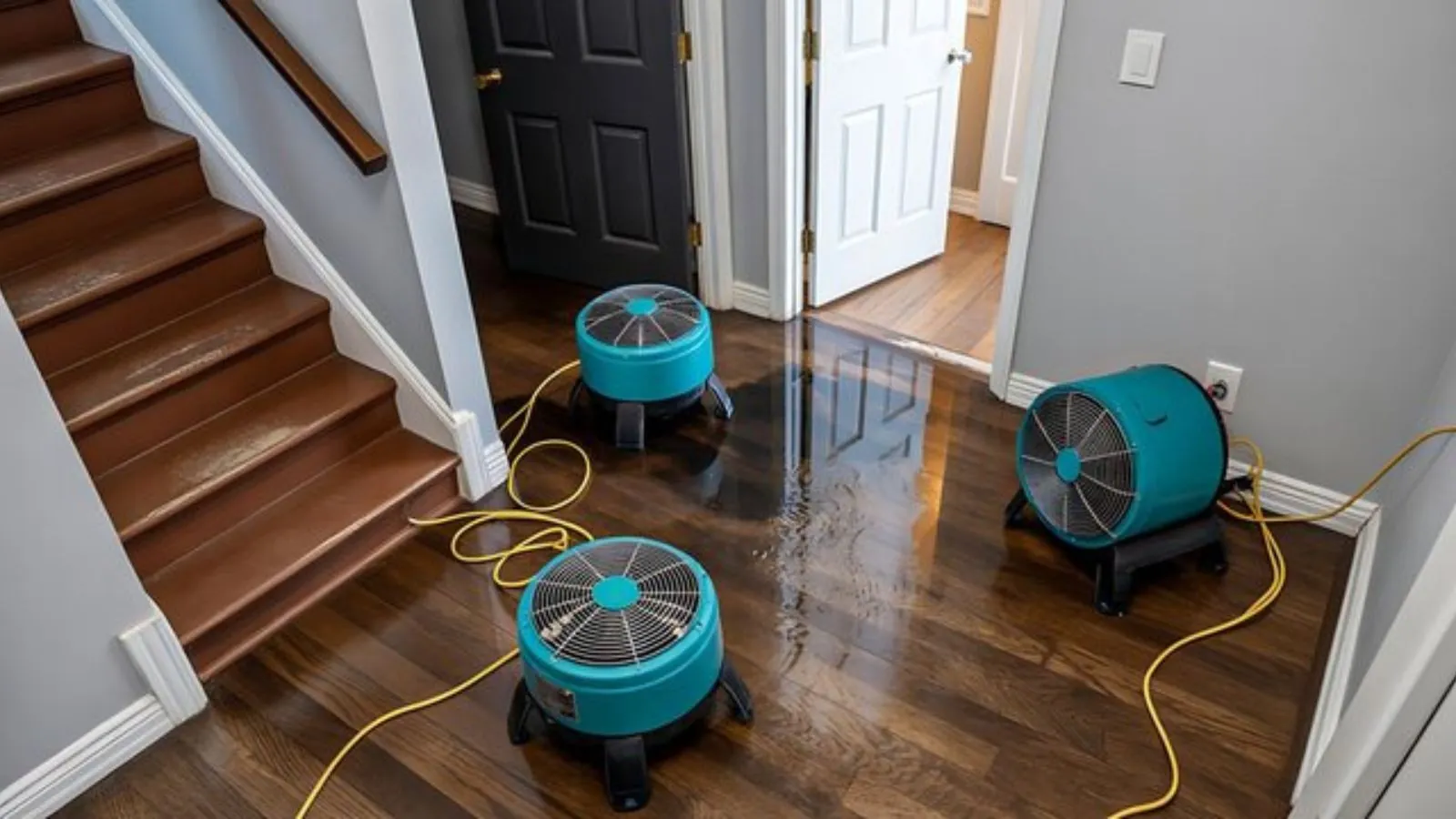
Two people, one leak
When water damages a rental, the tenant lives with it and the landlord has to fix the building. Both have things to do in the first hour, and both benefit from doing them in order.
This guide gives general information for Ohio rentals. It is not legal advice. For a dispute, speak with an attorney or a legal aid service.
If you are the tenant
- Make it safe. Keep away from water near outlets or appliances. Where electricity or gas is a risk, the utility or 911 comes before any other call.
- Stop the water if you can. Close the valve under the sink or behind the toilet, or the main valve if you know where it is.
- Tell the landlord at once. Call, then follow up in writing with the date and time. A text or email creates a record.
- Photograph everything. The source, every wet room and your damaged belongings.
- Protect your things. Move what you can to a dry place.
- Do not start repairs yourself unless the landlord agrees. The building is theirs to repair.
Keep a simple log of who you called and when.
If you are the landlord
- Respond quickly. A leak that runs overnight can damage the unit below as well.
- Stop the source. Send a plumber, or shut the supply to the unit.
- Start drying. Extraction and drying in the first day limit how much has to be rebuilt. See water extraction.
- Document the condition. Photos, moisture readings and a written scope protect you with your insurer and with the tenant.
- Tell your insurer.
- Keep the tenant informed about what will happen and when.
What Ohio law says landlords must do
Ohio Revised Code section 5321.04 sets out landlord obligations. In summary, a landlord must:
- Make all repairs and do whatever is reasonably necessary to keep the premises fit and habitable.
- Keep plumbing, electrical, sanitary, heating and other fixtures the landlord supplies in good and safe working order.
- Supply running water and reasonable amounts of hot water.
- Give reasonable notice before entering, except in an emergency. The statute presumes 24 hours is reasonable notice.
A burst pipe is an emergency, so entry to stop the water does not have to wait for notice. Later visits to dry and repair normally do.
Tenants have duties too, under other sections of the same chapter, including keeping the unit clean and using plumbing fixtures properly. If you have questions about your rights or obligations, read the statute or ask an attorney.
Who pays for what
| Item | Usually the responsibility of | Notes |
|---|---|---|
| Repairing the building: walls, floors, plumbing | Landlord | Often through the landlord's property insurance |
| Tenant's belongings | Tenant | Usually through renters insurance, if the tenant has it |
| Temporary housing | Depends on the lease and the policies | Ask both insurers |
| Damage caused by a tenant's negligence | May fall to the tenant | Depends on facts and the lease |
A landlord's policy normally covers the structure and does not cover a tenant's furniture, clothes or electronics. Renters insurance exists for that. Coverage for any loss depends on its cause and the policy wording, so each side should ask its own insurer.
Leaks between units
In apartment buildings and duplexes, water from one unit often shows up in another. The upstairs tenant may not know anything is wrong. If water is coming through your ceiling, tell your landlord and, if you can, the neighbor above.
Each unit should be documented separately. Our commercial water damage restoration page covers multi-unit buildings.
Mold in a rental
Mold follows moisture. Tenants should report leaks and damp promptly, and landlords should fix the moisture source and remove affected materials. Health questions belong with a physician. The process is described on the mold remediation page.
Records both sides should keep
- Dated photos and video.
- Written notice from tenant to landlord.
- The plumber's invoice stating the cause.
- The restoration scope and drying log.
- Receipts for any costs.
- All messages between tenant and landlord.
Rentals in North Olmsted, OH
Section 5321.04 is state law, so it applies to residential rentals in North Olmsted as it does elsewhere in Ohio. Locally, the city's Division of Building enforces codes relating to the repair of structures. Its office is at City Hall, 5200 Dover Center Road, and the main number is (440) 777-8000.
If a sewer backup is involved, report it to the city as well as to the landlord. The number for sanitary sewer trouble in North Olmsted is (440) 777-1881, at the Waste Water Treatment Plant. City guidance says the bottom level of a building is where sewer water appears in a severe storm, which matters for garden-level and basement apartments.
We document rental losses for owners and tenants throughout the North Olmsted service area, including houses rented out in Bretton Ridge.