
Rule out the simple explanations
Before you go looking for a leak, check the obvious.
- Did the billing period run longer than usual?
- Was the previous bill estimated and this one actual?
- Did you fill a pool, water a new lawn or have guests?
- Has the rate changed? Your utility can tell you.
If none of those fits, treat the bill as a leak alarm.
The meter test
Your water meter measures everything that enters the house. If it moves when nothing is running, water is escaping.
- Turn off every tap, appliance and hose. Make sure nobody flushes.
- Find the meter and look for the small leak indicator, often a triangle or star that spins with any flow.
- If it is turning, you have a leak.
- For a slow leak, write down the reading, use no water for two hours, and read it again.
Next, close the main shutoff valve inside the house and look again. If the indicator stops, the leak is inside the house. If it keeps moving, the leak is between the meter and the house, and that is a call to a plumber and your water utility.
The usual suspects
| Source | How to check | Does it damage the house? |
|---|---|---|
| Running toilet | Put food coloring in the tank. Color in the bowl after 15 minutes means a leaking flapper | Rarely. It wastes water down the drain |
| Dripping tap or shower | Look and listen | Rarely, unless it drips behind the wall |
| Outdoor hose bib or irrigation | Check for wet soil or a hissing sound | Sometimes, if the line passes through the wall |
| Water heater | Look for moisture at the base and the relief valve pipe | Yes, if it reaches walls or flooring |
| Appliance supply line | Pull the machine out and look behind | Yes. Often hidden for weeks |
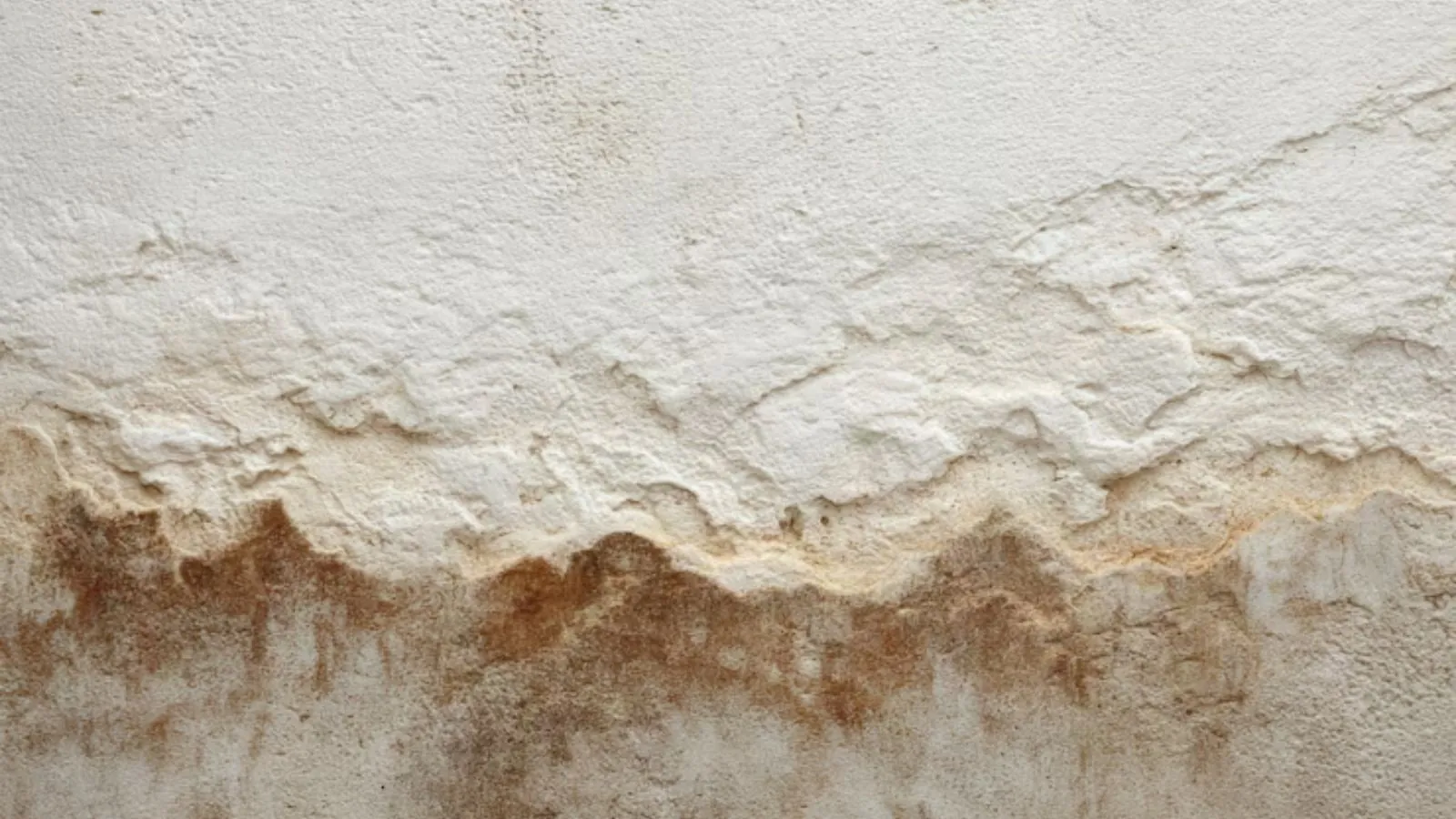
| Pipe in a wall or ceiling | Stains, soft drywall, musty smell | Yes |
| Pipe under a concrete floor | Warm or damp patch on the floor | Yes |
Toilets are the most common cause of a high bill and the least harmful to the house. The leaks that do damage are the quiet ones inside the structure.
Signs a hidden leak has already caused damage
Walk the house with a flashlight and check for these.
- A stain on a ceiling below a bathroom.
- Paint that bubbles or baseboards that have swollen.
- A floor that feels warm, damp or spongy in one area.
- Wood flooring that has started to cup.
- A musty smell in one room or cupboard.
- Mold at the base of a wall.
A warm patch on a ground-level or basement floor can indicate a hot water line leaking beneath it. Our slab leak water damage page explains what that involves.
What to do when the meter says leak
- If you can see where the water is going and it is damaging the house, close the main valve.
- Call a plumber to locate and repair the leak. Finding a hidden leak may need acoustic equipment.
- Once the leak is fixed, have the wet area checked with a moisture meter. A leak that ran for a billing cycle has usually soaked more than you can see.
- Dry it properly. See structural drying.
- Ask your utility whether it offers any adjustment for a repaired leak. Policies differ.
Why drying matters after a slow leak
A slow leak rarely leaves a puddle. The water soaks into subfloor, framing and drywall and stays there. Fixing the pipe stops new water arriving, but it does not remove what is already in the materials.
Left wet, those materials can grow mold and wood can begin to decay. A moisture assessment after the plumbing repair tells you whether you need drying equipment or just ventilation.
Insurance
Insurers often treat a long-running leak differently from a sudden one. Damage from a leak that went on for weeks may be considered gradual. Ask your insurer how your policy treats it, and keep the plumber's invoice and your water bills as a record of when the problem began.
High water bills in North Olmsted, OH
The age of the housing here is the main local factor. In the two decades after 1950, the city's head count climbed from 6,604 to 34,861, and the majority of homes date from that period. Original shutoff valves, supply lines and fittings in houses of that age are worth an inspection if your bill has jumped.
Check your bill for the name and phone number of your water provider, and call them first with billing questions. They can tell you whether a reading was estimated and whether usage changed on a particular date.
If you see water in the street or bubbling from the ground near your property, report it. Street water and storm drains are handled by the Service Department on (440) 716-4151. Out of hours, or for anything involving the sanitary sewer, use (440) 777-1881.
Has a hidden leak damaged a house on a Deerfield street, or elsewhere in our North Olmsted coverage? We can assess and dry it once the pipe is repaired.