
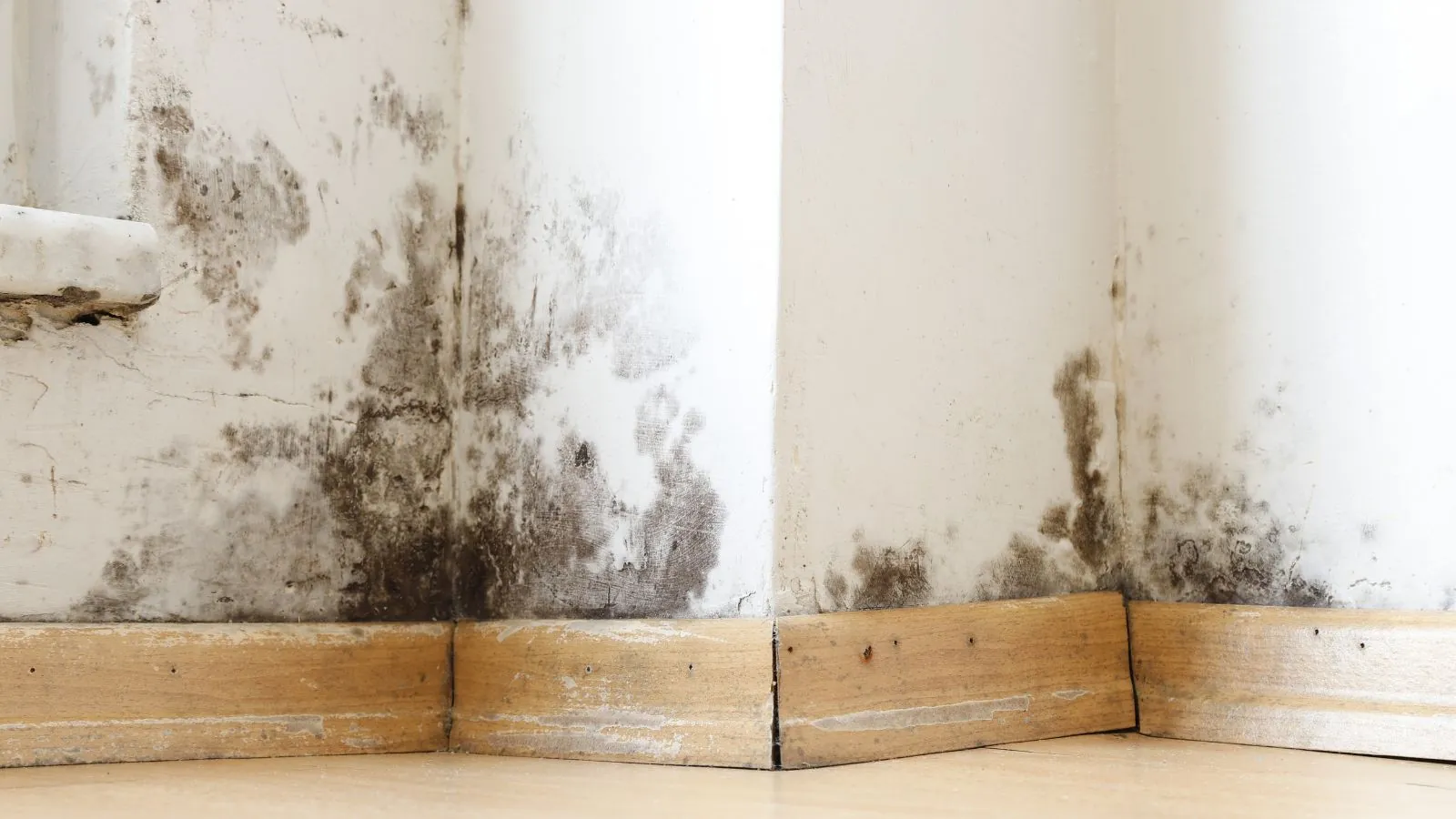
What the smell is telling you
That damp, earthy odor is produced by mold and bacteria growing on wet material. It is a by-product of growth, which means the smell itself is evidence. Somewhere, something has stayed wet long enough for growth to start.
So the question is never how to cover the smell. It is where the moisture is.
Why it lingers after the floor looks dry
Surfaces dry in a day or two. The layers underneath do not.
- Carpet pad holds water long after the carpet feels dry.
- Drywall wicks water up inside the wall, where air does not reach.
- Insulation stays wet for weeks inside a closed cavity.
- Subfloor and framing absorb water slowly and release it slowly.
- Cabinet bases trap water against the floor.
If a leak was mopped up and left to air-dry, these hidden layers are the usual source of a smell that appears a week or two later.
Tracking it down
- Go back to where the water was. Start at the original leak and work outward.
- Use your nose at floor level. Smell along baseboards, inside closets and cabinets, and at floor vents.
- Lift a carpet corner. Check the pad and the backing for dampness or discoloration.
- Press on walls and baseboards. Soft or swollen means wet inside.
- Check under and behind appliances.
- Look at the level below. A stain on the ceiling downstairs marks the path the water took.
| Where the smell is strongest | Likely source |
|---|---|
| At carpet level | Wet pad or subfloor |
| Inside a closet or along one wall | Wet drywall or insulation in that wall |
| Under the sink | Damp cabinet base or a slow leak |
| In the basement generally | High humidity, past seepage, damp finished walls |
| When heating or cooling runs | Damp ductwork, a wet filter, or a drain pan problem |
| Coming from floor vents | Water in ducts or a damp space below |
When your nose runs out, a moisture meter takes over. It reads moisture inside walls and floors without opening them.
What does not work
- Air fresheners and candles. They add a scent and change nothing.
- Bleach on porous surfaces. It lightens stains and adds water.
- Ozone machines on their own. They can reduce odor in the air for a time, but they do not dry anything, and ozone is an irritant. Do not stay in a room while one runs.
- Painting over it. The smell comes through.
- A household fan. It moves damp air around.
What does
Dry the source. This is the real fix. Wet materials are either dried to a measured target or removed. Our structural drying page explains the equipment and how dryness is confirmed.
Remove what cannot be dried. Carpet pad, wet insulation, swollen particleboard and drywall with growth in it have to go.
Clean what stays. Framing and concrete are cleaned and, where appropriate, treated.
Lower the humidity. A dehumidifier keeps a basement below the level mold likes.
Then deodorize. Once the source is gone, any remaining odor in fabrics and air clears quickly with cleaning and ventilation.
Is the smell mold?
Often, yes. A musty smell with no visible growth usually means mold in a hidden place: behind a wall, under flooring or above a ceiling. Mold needs moisture, so finding the damp spot finds the mold.
If you uncover a large patch, stop and close the room. Disturbing it spreads spores. Our mold remediation page walks through containment and removal. Health questions about mold belong with a physician.
How long is too long?
A faint damp smell for a day or two after a spill is normal. A smell that is still there after a week, or that returns in humid weather, means material is still wet. The sooner it is found, the less has to be removed.
Musty basements in North Olmsted, OH
In North Olmsted, a musty smell most often leads to the basement. Municipal guidance acknowledges that wet weather can overload the sanitary sewers and send water into lower levels, and federal weather records show nearly 1,000 flooded homes here and in two adjoining suburbs after the May 12, 2014 storm.
Many homes built here in the 1950s and 1960s have basements that were finished after the house was built. Drywall, carpet and paneling added over concrete can hide dampness for years. If your basement took water in a past storm and the finishes were never opened, that is the first place to test.
The city also advises checking where sump pumps, downspouts and footing drains discharge. Water that is sent to the right place stays out of the basement. Odor tracing is something we do on Deerfield streets and in every other part of the area we serve.