
Follow the moisture
Mold needs moisture. That makes detection simpler than it sounds: you are really looking for places that are damp, or were. Find those and you find the mold, or rule it out.
You need a flashlight, your sense of smell and half an hour.
The three signs
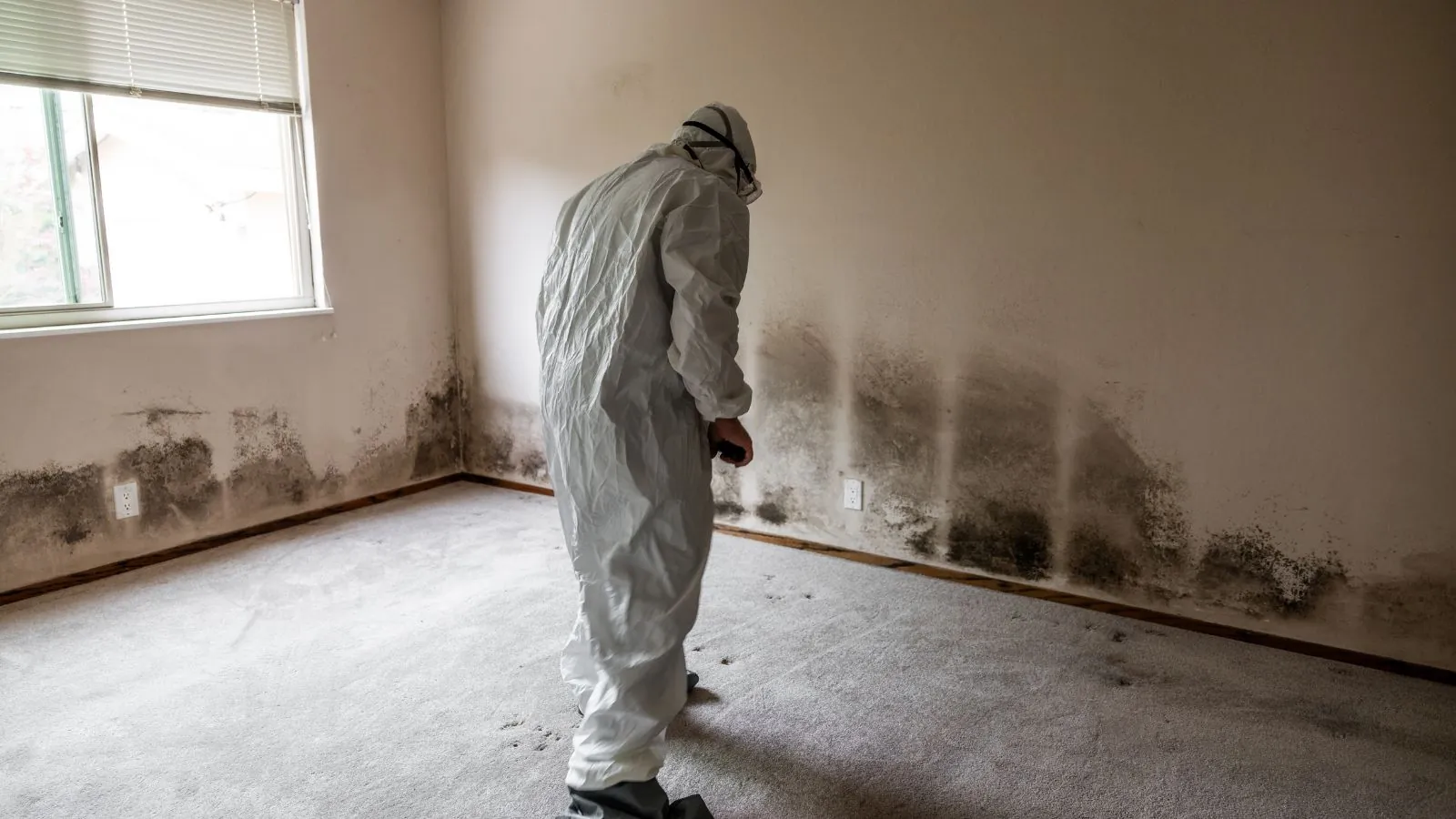
Sight. Spots or patches that are black, green, gray, white or orange. Mold can look fuzzy, slimy or powdery. Staining or bubbling paint nearby is a strong hint.
Smell. A musty, earthy odor that is stronger in one room or one cupboard. Trust it even when you can see nothing.
History. Any place that has been wet: a past leak, a flooded basement, a roof repair, a window that drips in winter.
Room-by-room checklist
| Area | Where to look | What to check for |
|---|---|---|
| Bathroom | Ceiling above the shower, caulk lines, behind the toilet, inside the vanity | Spots on paint, soft caulk, swollen cabinet floor |
| Kitchen | Under the sink, behind the dishwasher kick plate, beside the refrigerator | Stains, a soft cabinet base, musty smell when doors open |
| Bedrooms and closets | Corners of outside walls, behind furniture, closet floors | Speckling on walls, musty clothes or boxes |
| Laundry | Behind and under the washer, around the standpipe | Damp flooring, stained baseboards |
| Basement | Base of finished walls, under stairs, around the floor drain, behind stored boxes | Tide marks, peeling paint, white or dark growth |
| Attic | Underside of the roof decking, around bathroom fan ducts | Dark staining on the wood, damp insulation |
| Windows | Sills, tracks and the wall below | Black residue, soft sills |
| Heating and cooling | Around the indoor unit, the drain pan, nearby closets | Standing water, rust, stains |
Lift a corner of carpet in any room that has been wet. Mold on the backing or the tack strip means the pad and floor stayed damp.
Hidden mold
Sometimes the smell is clear and the source is not. Mold grows well inside wall cavities, under flooring and above ceilings, where it is dark and damp.
Clues that point to hidden growth:
- A musty smell that gets stronger when the heating or cooling runs.
- A stain that appears, dries and reappears.
- Baseboards pulling away from the wall.
- Flooring that cups or lifts with no spill to explain it.
- A room that always feels humid.
Do not cut holes at random. A moisture meter reads through drywall and flooring, and a thermal imaging camera shows cool, damp areas. Together they narrow the search to a spot worth opening.
Do you need a mold test?
Often you do not.
| Situation | Is testing useful? |
|---|---|
| You can see mold and know the water source | Rarely. Remove it and fix the moisture |
| You smell mold but cannot find it | Sometimes. A moisture survey usually finds it faster |
| A buyer, lender or landlord wants written results | Yes. Use an independent assessor |
| After remediation, to confirm the result | Yes. Clearance by someone independent of the remediation company |
Home test kits that grow a sample on a dish will almost always show something, because mold spores are present in outdoor and indoor air everywhere. A positive dish does not tell you whether you have a problem.
What to do when you find it
A little growth on glass or tile comes off with soapy water. On drywall, carpet, insulation or wood, the moisture has to be found and the material assessed. Our mold remediation page explains how larger areas are contained and removed.
If the area is still wet from a recent leak, drying is the first job. The structural drying page sets out how dryness gets confirmed.
Avoid disturbing a large patch. Scrubbing, sanding or running a fan across it spreads spores to rooms that were clean.
Where to look first in a North Olmsted, OH home
Start in the basement. City Hall's own sewer backup guide warns that lower levels can take sewer water when the system is overloaded by rain. National Weather Service records put North Olmsted among three suburbs where nearly 1,000 homes flooded in a single evening in May 2014. A house that took water then, and had its basement refinished without opening the walls, is a prime candidate for hidden mold.
Next, think about the age of the house. Most homes here were built in the 1950s and 1960s. Bathrooms and kitchens of that age have had decades of small leaks. The oldest houses, in the Butternut Ridge Historic District, have plaster walls where staining shows differently than on drywall.
Ohio's property disclosure form asks sellers whether the home has been inspected for mold, so findings matter when you sell. We carry out assessments in Bretton Ridge and across the North Olmsted service area.