
What these products are
Hardware stores sell several kinds of mold product. Most fall into four groups.
| Product type | Main ingredient | What it does | Where it falls short |
|---|---|---|---|
| Bleach-based stain removers | Sodium hypochlorite | Whitens stains on hard surfaces quickly | Does not penetrate porous materials, strong fumes |
| Peroxide-based cleaners | Hydrogen peroxide | Lifts stains with less odor | Slower, still a surface treatment |
| Detergent or surfactant cleaners | Soaps | Physically removes growth when wiped | Needs scrubbing and rinsing |
| Preventive coatings and sprays | Varies | Leaves a film meant to resist regrowth | Does nothing if the surface gets wet again |
We do not recommend or rate brands. The label on any product tells you the active ingredient and the surfaces it is meant for, and that is the part worth reading.
Where they work
On non-porous surfaces, a cleaner and some effort remove mold completely, because the growth is sitting on top.
- Ceramic tile and grout
- Bathtubs, shower bases and glass doors
- Sealed countertops
- Metal window frames
- Sealed concrete
For these, follow the label, ventilate the room, wear gloves and eye protection, and rinse afterwards. Never mix products.
Where they do not
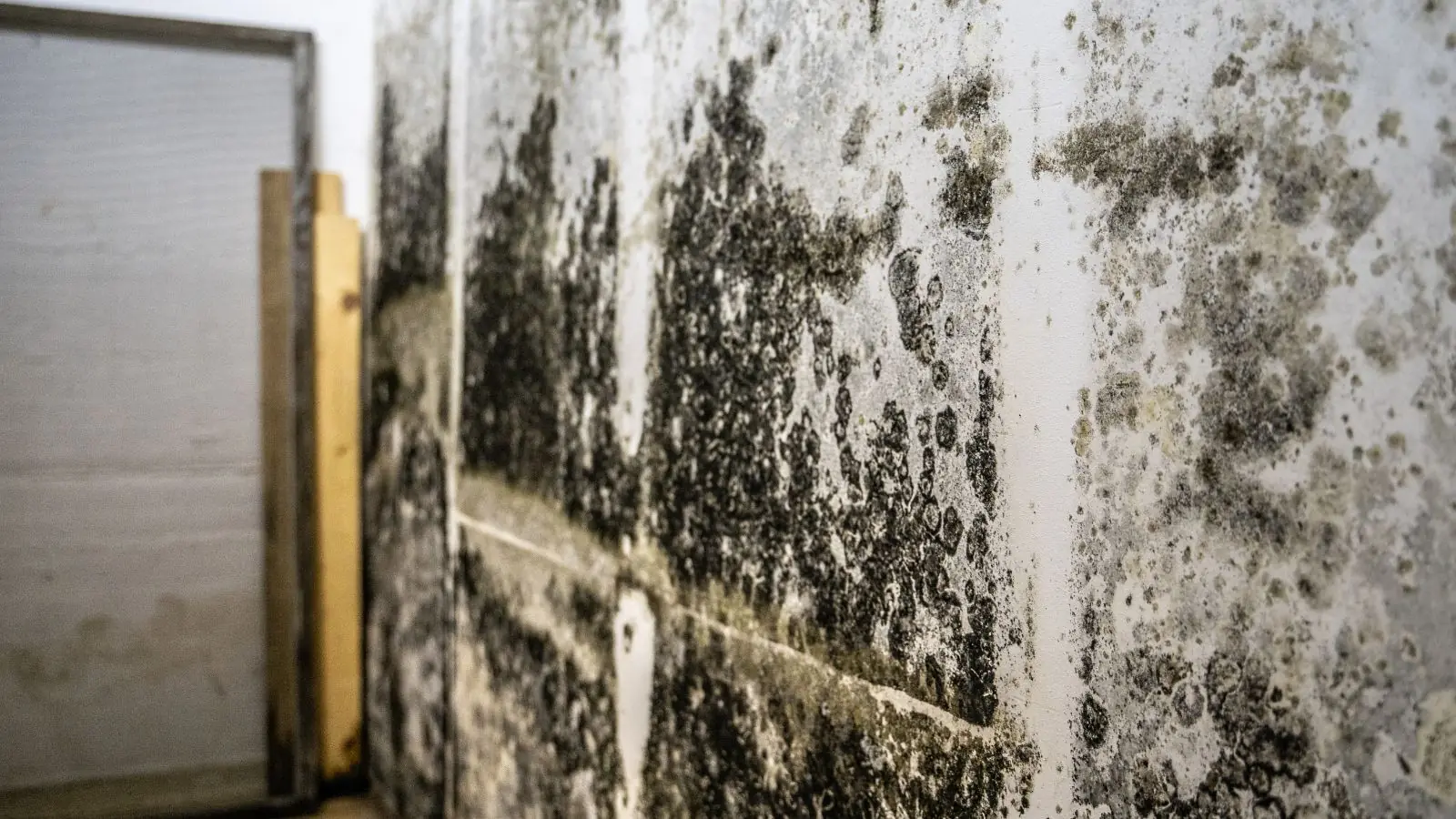
On porous materials, mold grows into the material. A spray changes the color of the surface and leaves the growth inside.
- Drywall and the paper facing on it
- Carpet and carpet pad
- Ceiling tiles
- Insulation
- Unsealed wood and particleboard
- Upholstery and cardboard
A product advertised as needing no scrubbing is usually a bleach-type stain remover. It makes the stain vanish, which feels like success. If the material is porous and the moisture is still there, the stain returns in a few weeks.
The test that matters
Ask what happens a month later.
- It stays clean. The problem was surface condensation and the cleaner was the right tool.
- It returns in the same place. Moisture is still reaching that spot. Look for a leak or a ventilation problem.
- It returns bigger. The material is wet inside. Stop spraying.
Repeated spraying of a damp wall adds more water to it. That is the opposite of what the wall needs.
Reading the label
Three things on a label are worth a minute of your time. The active ingredient tells you which of the four groups the product belongs to. The surface list tells you where the maker tested it. The contact time tells you how long it must stay wet to work, which is often ten minutes or more.
If drywall, carpet or unsealed wood is missing from the surface list, the maker is telling you what this guide is telling you. Take the hint.
What a spray cannot do
No product in a bottle can do the three things that end a mold problem.
- Stop the water. A leak, seepage or condensation has to be fixed at its source.
- Dry the material. Wet drywall and framing need airflow and dehumidification. See structural drying.
- Remove what is contaminated. Porous material with mold in it has to leave the building.
Professional work follows the ANSI/IICRC S520 standard, which relies on containment, HEPA filtration and physical removal. Chemicals play a small supporting part. Our mold remediation page explains each step.
Fogging and whole-room treatments
Some products and services offer to fog a room with a mold-killing mist. Dead mold left in place is still mold on the material, and fogging does nothing about the moisture that grew it. Treat fogging on its own as cosmetic.
A sensible way to use cleaners
- Use them for bathrooms, window tracks and other hard surfaces.
- Clean small spots early, before they spread.
- Improve ventilation at the same time.
- If a spot is on drywall and bigger than your hand, find out why it is there before treating it.
- If you smell mold and cannot find it, no spray will help. Look for hidden moisture.
For North Olmsted, OH homes
Two local facts decide how far a spray bottle will get you. Most houses in North Olmsted date from the 1950s and 1960s, when the city's population grew from 6,604 to 34,861, and many have finished lower levels. City guidance on sewer backups accepts that a basement can get wet in a severe storm.
A basement wall that was wet from below is porous drywall with a moisture history. That is exactly the surface where a cleaner hides the problem instead of ending it. Sellers in Ohio are asked on the state disclosure form if the house has had a mold inspection and what was done about it, so a quick cosmetic fix can become an awkward question later.
If you are dealing with recurring basement mold in Deerfield or anywhere in the North Olmsted service area, start with the moisture.